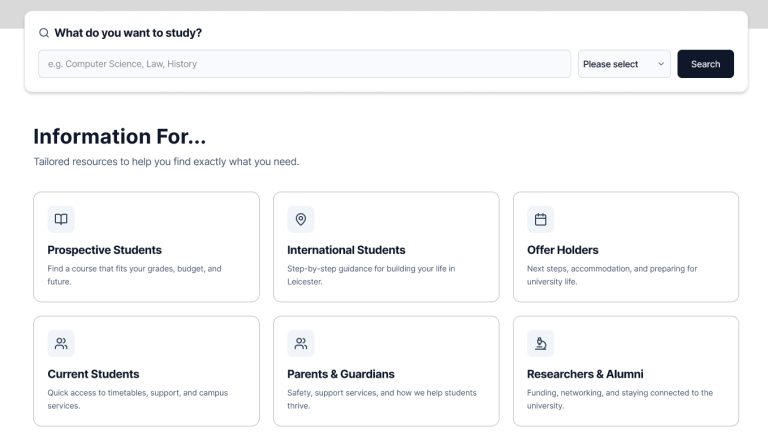
From pages to structured content models: what that actually means
It’s easy to say that a new website should be built around structured content rather than pages. The harder question is: what does that actually mean when you start building it?
It’s easy to say that a new website should be built around structured content rather than pages. The harder question is: what does that actually mean when you start building it?

A new approach to content design is helping the University prepare for an AI‑first search landscape. By focusing on structured content, clarity and trust, we’re creating digital experiences that are easier to understand, reuse and surface in AI‑generated answers, while continuing to meet the needs of our audiences.

A new approach to content and UX/UI design is reshaping the University of Leicester website. By focusing on mobile‑first design, accessibility and reusable systems, we’re building a web presence that is clearer, more sustainable and better aligned to user needs.

Contensis is our new content management system (CMS), designed to make editing web pages simpler, faster and more intuitive. Built around the needs of both occasional and regular editors, it will streamline workflows, reduces reliance on central teams, and supports confident, consistent content updates across the University.

As we continue shaping the University Content Management (UCM) programme, we’re building a clearer picture of how colleagues create and maintain digital content. Through 23 workshops and feedback sessions, we gathered detailed insight into what works, what holds editors back and what they need from a CMS. This evidence is now driving our requirements, procurement decisions and design approach.

The University of Leicester is reshaping its website foundations to create a smoother and more sustainable digital experience that can grow with future needs. Through the University Content Management (UCM) programme, we will bring together updated technology, clearer processes and a stronger focus on users.